Saturday, September 6, 2014

Maasin: Bamboo Capital of Iloilo

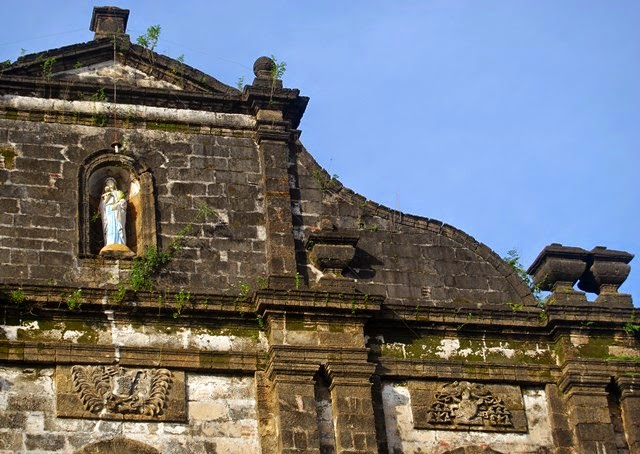
photo from sn.wikipedia.org
Maasin, Iloilo is a dedicated bamboo town located 29.5 kilometers west-central portion from the city. The town is blessed with scenic views of villages along plantations of bamboo where farms are being developed by the Municipal Government as one of its eco-tourism destinations.  Many of these farms showcase varieties of bamboo to have more people appreciate and discover more about it and it uses.

Think of your stay in Maasin as an escape from your hectic city life. Many of the farms in the area are ideal places for people who want to spend some time in lap of nature. Pamper yourself with long walks around the plantations and find a corner to read a good book or indulge the photographer in you.

Bamboo farming has a great potential in alleviating poverty and providing livelihood opportunities in the countryside. Bamboo is used to make chairs, wooden sofa, wooden beds, and as a frame for traditional houses. Bamboo is no longer considered as a poor man’s timber but a multi-purpose crop with so many uses.


BAMBOO FACTS

Bamboo belongs to the grass family and is known to be the largest grass in the world. There are around 91 genera and over 1,000 species of bamboos all over the world.  They are commonly found in East Asia and Southeast Asia but common in the Philippines are the bamboo species of Laak, Kawayan tinik, Kawayan tiling, Botong or Patong, Bolo and Kayali.

The size of bamboo varies from small annuals to giant timbers and divided into Clumpers – those that grow from the soil in a slowly expanding tuft; and, Runners – with underground rhizomes to produce shoots several metres from the parent plant. They are known to be the fastest growing woody plants in the world with a growth rate of about 24 inches daily. This is because it has a unique rhizome-dependent system. It produces flower only every 20 to 120 years, and the flower is the easiest way to classify the type.


ILOILO: BAMBOO CAPITAL IN THE PHILIPPINES

The province of Iloilo has an abundant supply of bamboo poles. Around 8, 085 hectares is planted with bamboo producing 2,426,487 poles every year with the municipality of Maasin devoting 3,000 hectares for bamboo farming.


The province supplies raw material requirements of 41 manufacturers, 32 domestic producers, and 9 exporters of various processed bamboo products (source: Western Visayas Agriculture and Resources Research and Development Consortium (WESVARRDEC).


With this, Iloilo is aiming to be recognized as the “Bamboo Capital of the Philippines.” With its increasing demand for bamboo poles, the provincial government is accelerating its plantation development efforts with a long-term plan of establishing additional bamboo plantations of about 58,200 hectares in the coming years.


DID YOU KNOW?

Aside from its household and industrial use, bamboo experts in Iloilo, for many years have been experimenting with other possible uses and are still discovering new applications. Bamboo enthusiasts, local government units and support agencies from the regional offices, livelihood cooperatives and researchers from the academe have committed to give full support to our local bamboo-based producers. People are exposed to study tours and with trainings related to bamboo and bamboo technology.

It is also used for preparing food. The chemical ingredients of bamboo in bamboo shoots, , are made up of 88.8% moisture, 3.9 % protein, 0.5% fat, 5.7 % carbohydrates and 1.1 minerals. Its amino acid content of bamboo is higher than cabbage, carrot, onion and pumpkin. Bamboo also contains 17 different types of enzymes and more than 10 kinds of mineral elements, such as chromium, zinc, manganese, iron, magnesium, nickel and cobalt. Mixes of tender bamboo shoots are used to clean wounds and treat ulcers and maggot-infested sores. Bamboo leaves are used to fight spastic disorders and bleeding conditions, as well as diarrhea and stomach disorders.

One of the major products of Maasin is bamboo charcoal. Iloilo Kawayan Marketing in Maasin in known to produce this 100% natural product that is ecologically friendly. When used as a fuel, it is smokeless and odourless that is why it is best for barbecues. Bamboo charcoal works as a natural fertilizer and pesticide. It is also used as a deodorizer. It can also be used to filter tap water. Alternatively, you can also try putting pieces of bamboo charcoal in a jug of tap water then leave it for 4-5 hours. The water in the jug will taste like mineral water.


Bamboo charcoal is now popularly used in soap due to its anti-microbial, anti-bacterial, anti-viral and anti-fungal properties. It cleans the skin deeply. Because of the incredible absorbency of the bamboo charcoal with activated carbon, the soap can clean to the very bottom of skin pores and does not leave a residue on the face. This means that the newly cleaned skin pores can receive natural moisturizing from the body’s oils. Because bamboo charcoal soap cleans the skins pores thoroughly and then allows them to be moisturized it is recommended that people with acne wash with bamboo charcoal soap.
  
Maasin is made up of 50 barangays over a land area of 15,658 hectares. It is bounded in the north by the Municipality of Janiuay; in the east by the Municipality of Cabatuan; in the south by the Municipal of Alimodian; and in the northwest by the mountain ranges of the province of Antique. It annually celebrates its patronal fiesta every 30th of December in honor of San Jaime. Market days are every Mondays and Thursdays.

To know more about Maasin and its established bamboo industry, visit their booth on 10th TUMANDOK celebration on September 18-20 at the fountain area of Robinsons Place Iloilo. For more information, please contact, Miss Kristine Mae Cartagena-Municipal Tourism Officer at 09088601549.


Agricultural Tourism at its Best in Leon

Bucari mountain ranges, Leon, Iloilo by King Erlano

Agricultural tourism was unheard of in Iloilo in the past, but many visitors have discovered that there is a wealth of knowledge to be gained by visiting farms. A new wave of business tourists are coming to Leon and are in increasing numbers.  Agricultural tourism plays a very important role for its economy. It is now a popular trend offering urban dwellers the chance to escape their fast-paced lifestyle and re-discover their rural roots.

The rise of agricultural tourism in Leon has resulted positive interests from local tour operators to put together custom-made agricultural tourism packages. The agricultural tourism packages offered by local tour operators include a visit to protected areas, ensuring that agricultural tourists also get a taste of the natural beauty and wildlife that it has to offer. The ecological integrity and the scenic value of its landscapes made the town attractive for the establishment of enterprises and for the tourist and recreation businesses. Tourists can sample local food, participate in local customs, and practice fair trade by purchasing handcrafts and agricultural products directly from producers, benefiting the local economy.

photo by John Ray Palmares

There is something for everyone in Leon, and with just a little planning and pre-trip discussion, visitors can experience a rural vacation that will inspire, excite and leave lasting memories.

Bucari, Leon, Iloilo by fotokoja.blogspot.com

Active travellers can take a challenging hike or bike to the scenic pine-clad area of BUCARI, Sitio Tabionan and experience some of the best off-road trek that Iloilo has to offer. It has access to acres of unspoiled mountain pastures, with panoramic views. Visitors will not go home disappointed. Situated 1,200-meters above sea level, Declared as an Eco-tourist zone, Bucari is 10,432.875-hectares and features a subtropical highland climate and on some days it even gets foggy. It is popularly known as the "Little Baguio of Iloilo."  You will be amazed by the impressive views of verdant mountain ranges of neighboring towns. Whether you are enjoying a thrilling downhill path on foot or on bike or stopping for a picnic at a scenic spot, you are going to have a great time trekking or mountain biking. The upland barangay of Bucari can be reached by jeepney at the Leon public plaza on a scheduled trip daily. Along your way to Bucari are scenic patches of vegetable producing sitios known for their cabbages, sweet peppers, eggplants, beans, sweet potatoes, monggo and peanuts. This has brought a lot of income to small farmers. Not to mention mango orchards where the town is noted for, the sweetest and the best mangoes in Iloilo.

photo by John Ray Palmares

Bucari plays a very important role for the promotion of Leon. In recent years, many day-trippers visit the area, though the town is still struggling with their overnight stays due to few accommodation establishments, Bucari is the centrepiece of every tourism activity in Leon. For those who would want to stay overnight, the area has bamboo cottages lodges and standard lodge rooms. Booking in advance is the best way to secure the accommodations you want. Before booking, visitors are encouraged to do some research online to get a feel for the area's geography and decide which lodging best suits them.

Talon Inn, Bucari National High School

PINERIDGE BUCARI in Barangay Bacolod is the most popular vacation and adventure getaway attraction in Leon. The entire property is set in the midst of mountain ranges and every room has its own special view of this splash of nature. The pine-clad area is also never far from the resort and you can catch a glimpse of the beautiful Agua Colonia foothills from anywhere in the resort and you will find that your accommodation has nothing but the best natural setting. For visitors, a minimum fee of P150.00 goes with a native coffee and dessert. For those who would want to stay overnight, the room can accommodate six (6) persons for a fee of P1,000.00. Gourmet meals are on a reservation basis to a minimum of five (5) persons with price ranging from P300.00-P500.00.  A 3-day reservation basis is needed. For more information, please call (033) 320 0977 or mobile at +63-906-399-4319 or you can email them at info@pineridgebucari.com. For the budget-conscious traveller, TALON INN situated within the premises of Bucari National High School offers bamboo lodges perfect for a group of four. It has sweeping views of beautiful mountain ranges and scenic rice terraces. For more information, please contact 09098963503.

For the history buff, they can explore the St. Catherine of Alexandria Parish Church The Baroque architectural design the church was once considered as the biggest stone edifice in the whole of Panay. The construction started in 1869, three years after the town was transferred from Camando, the original townsite. The interior was Renaissance-Romanesque in style. It measures 100 feet high and 300 feet long and covering almost two streets of the town, namely Sta. Catalina and Sto. Niño. The walls were three and a half feet thick and five feet in each post is elevated to more than 32 feet to the roof. The rocks used in the construction were quarried from neighboring sitios.

Leon is 28 kilometers on the west-southwest portion of Iloilo. It is bounded in the north by the municipality of Alimodian; in the west the municipality of San Remegio of the province of Antique; in the south by the municipalities of Tigbauan and Tubungan; and in the east by the municipality of San Miguel. It has a total land area 14,005 hectares politically subdivided by 85 barangays. It annually celebrates its patronal fiesta every 25th of November in honor of Sta. Catalina de Alejandria. Market day is every Saturday.

Get to know more about Leon and the places to see on the 10th TUMANDOK Celebration on September 18-20 at the fountain area of Robinsons Place Iloilo. For more information, please contact Mrs. Rose Leah Kilayko-Municipal Tourism Officer at 09108167169.


Sustaining Heritage Tourism in Cabatuan

Cabatuan Catholic Cemetery by Vincent Angelo Gefes

Iloilo's historic towns attract mostly local travelers and small towns, such as Cabatuan, also get their fair share of attention.

Tourism is one of Cabatuan’s important industries. It is their preferred economic development strategy since it is an opportunity for this town to identify, package and market their existing assets. Heritage tourism is its fastest-growing segment.  The town is among the popular in the province in heritage tourism visitation.  More travelers are visiting remnants of Spanish culture in the area. The historic and cultural resources associated with the people of Cabatuan, its events, or aspects in their community’s past gave the municipality its sense of identity and help tell its story. 

Cabatuan Church, photo by Tara Yap

ST. NICOLAS OF TOLENTINE PARISH CHURCH is of Neo-Classical architectural style. The first parochial church was finished in 1732, same year when it became an independent parish. The present church was constructed in 1834 under the supervision of Father Ramon Alquezar. It was finished by Father Manuel Ruiz in 1866 using bricks. A red brick convent was built under the supervision of Father Juan Porras in 1876. Minor restoration was done by Father Manuel Guiterrez in 1890.Known to be one of the most beautiful churches in Iloilo during its time, it was described as the “Model of Temples” by El Eco de Panay and the Largest Brick Church in Panay. Every side of the church was a façade in itself. It was said to have looked more of a Basilica. It was accented by three domes where at each side of the church were big clocks and the center dome was over the altar. It measured 50 meters in length and 20 meters in width. Its thickness was about a meter and a half. It used to have 19 circular, multi-colored window panes and 10 massive doors. The altar was flanked by two smaller altars. The belfry had four windows with four big bells. On its ceiling were paintings of Rome and chandeliers. In 1942 it was burned by guerillas and totally destroyed by Japanese forces the following year. The front portion of the church however was not damaged. The bricks and the stones of the church were used to repair the landing field in Tiring.

CASA or the town’s municipal hall was built along with the church sometime 1734. Though its second level was damaged by war and other calamities, the ground floor is centuries old characterized by columns of art deco architectural design with semi-arched windows of capiz shells of Tuscan-inspired architecture.

Roman Catholic Cemetery, photo by Vincent Angelo Gefes

CABATUAN ROMAN CATHOLIC CEMETERY in Barangay Banguit is a four hectare perfectly square shaped cemetery constructed in 1886 under the supervision of Father Juan Porres, Father Cesareo Prodigo and was continued by Father Manuel Guiterrez in 1890. With elegant iron grills, its walls and chapel were made of stones quarried from the mountains in Leon. It was heavily damaged during the 1948 Lady Kaykay earthquake and was reconstructed.


relic from the original cross at pamul-ogan Hill

PAMUL-OGAN HILL SHRINE in Barangay Pamul-ogan is popular especially during the Holy Week. It is said that when Spanish authorities set foot in the town they planted a Molave Cross on the hill. What remained of the cross is a piece of wood almost 2 feet in height with the date 1732 inscribed. The hill overlooks the poblacion of Cabatuan and the New International Iloilo Airport.

Tree of Bondage, phtoto courtesy of Cabatuan Tourism Office

TREE OF BONDAGE is considered as a shrine by the people of Cabatuan situated in the heart of their municipal plaza fronting the historic Municipal Hall. The historic calachuchi tree has long been standing as one of the pride of the town and has been identified as a tourist spot. It constantly is by local tourists. Local stories has it that during Spanish rule, locals who refuse to do labour for the construction of local roads, the church and bridges, as well as other public structures were tied to the tree and whipped. Presently, the tree framed with chains attached to poles and a concrete base.

BALAY TABLEA. Even the local cuisine has indigenous and foreign influences the strongest is from Spain that ruled the Philippines for almost 400 years. Historians claim that our local cuisine is almost 80 percent of Spanish origin. Because of the Spaniards elite community at that time, our dishes were also adapted by the upper-class Filipinos. The drinking of chocolate has a long tradition in many local towns all over the country. It said that sometime in the 17th century, Spanish authorities pushed the growing of cacao trees and making its beans into cacao tablets popularly known as tablea.  Fresh cacao beans are removed from their pods, and peeled then dried under the heat of the sun. The beans are then roasted and are manually grinded. It is then mixed with a little sugar and formed into tablets. It is then mixed with a little water, milk and sugar and boiled to almost syrup consistency and served hot especially during breakfast and other special occasions. Cacao Tablea is now a sought after delicacy and famous cottage industry in Cabatuan. It has its own specialty house right at Rizal-Ilawod Street and is owned and managed by Caterine Taleon. There visitors can taste one of the best native chocolate drink in the province.

The Second-Class municipality of Cabatuan is 24.2 kilometers away from the city. It is politically subdivided into 68 barangays over a land area of 8,248 hectares populated by 50, 861 residents (2010 Census on Population). It annually celebrates its Religious Fiesta every 10th of September in honor of their patron San Nicholas de Tolentino. Tinuom Festival is celebrated in the last week of August till the 2nd week of September. Markey days is every Wednesday and Sunday.

To experience the historic heritage of the Spanish colonial times, visit the town exhibition during the 10th TUMANDOK celebration on September 18-20 at the fountain area of Robinsons Place Iloilo. For more information, please contact Mr. Francisco Gonzaga Jr. –Municipal Tourism Officer at 09283649477.


Thursday, September 4, 2014

The Unchartered Heavens of Carles

Cabugao Gamay Island, Gigantes Sur, Carles, Iloilo, photo by Ray Tabafunda
Carles, Iloilo has some of the most beautiful and unique islands in the Philippines. Scattered almost a dozen islands, they are unknown to many and secret to few. The most popular are the Gigantes Group (around 10 of them) situated for about 18 kilometers by motorized boat from Bangkal Fishing Port in the mainland. The most popular and sought-after of these islands are the bigger islands of Gigantes Sur comprised of the barangays Lantangan and Gabi; and Gigantes Norte with barangays Asluman and Granda. All have unique features along with their warm, clear water and unspoiled beaches.

The Barangay of Gabi in Gigantes Sur is the best place for beach holiday away from the crowds. It is well-known for its unspoiled scenery and pristine white beaches. There is a good chance visitors can find a secluded one to themselves. This is the place families and nature lovers go for a relatively isolated beach holiday. However, in the peak season during summer, its population balloons when a plethora of free-campers and day trippers both local and foreign arrive daily to indulge in the waters of these islands.

Antonia Island, Gigantes Sur, Carles, Iloilo, photo by Ray Tabafunda

ANTONIA ISLAND is a privately-owned small island of enormous beauty with the least signs of civilization. This is one of the very few islands in Carles that is nearly uninhabited. It is no wonder a lot of visitors, mostly beach lovers and backpackers find it hard to leave.  It has grown into an energetic destination for young travellers looking to sunbathe with a bit more privacy.

Tangke, Gigantes Sur, Carles, Iloilo, photo by Al Destacamento

TANGKE is a hidden saltwater lagoon formed by a surrounding wall of granite monolithic cliffs. During low tide, the level of water also recedes but also rises when it is high tide. Visitors to the area need to climb on its steep rocky wall that serves as the lagoon’s fortress. However, an easier and shorter climb from where the motorized-boat docks alongside its walls is done only during high tide. The lagoon’s rocky borders offer visitors one-of-a-kind formations. Its deep blue waters, dramatic vertical cliffs, and large caverns awaiting snorkelling exploration are enough to make this one of the best destinations in the area.

Cabugao Gamay, Gigantes Sur, Carles, Iloilo, photo by Ray Tabafunda

CABUGAO GAMAY is a privately-owned island surrounded by azure waters excellent for swimming and snorkelling activities. It is one of Iloilo’s most popular island-hop spots. After docking at the base of the island, a climb up the rocky hill steps to a breath-taking view of its outlying area and it is well worth the effort. Several other white sand island beaches are seen adjacent to the beach.

Sitio Pulupandan, Gigantes Sur, Carles, Iloilo, photo by Ray Tabafunda

SITIO PULUPANDAN is an idyllic deserted white-sand coral islet lapped by turquoise waters. The place is simply stunning, almost an hour away by motorized boat from the mainland. The islet serves as a resting area for fishermen in the area. The islet is a perfect place to go snorkelling and diving.

Bantigue Island, Gigantes Sur, Carles, Iloilo, photo by Ramon Ramirez

BANTIGUE ISLAND is famous for its long stretch of fine sandbar. Its soft creamy sandy landscape is kissed by turquoise waters makes for a good swimming experience. The whole landscape is framed by very few thatched houses lined with coconut trees. It is not to be missed on your way to the other islets. 

Want to go off the beaten track for some rest and relaxation?  Carles is truly one of the best kept secrets of Iloilo. Beautiful scenery, crystal clear turquoise water, and soft white coarse sand make its island beaches one of the best to visit. Peaceful walks, refreshing solitude and the breath-taking daytime and night-time sky await you here.

Carles is 147.6 kilometers away or a 3-hour bus ride from Northern Iloilo Public Transport Terminal in Barangay Tagbak, Jaro, Iloilo City. It is politically subdivided into 33 barangays over a land area of 11,202 hectares and populated by 62,690 residents (2010 Census on Population). To get to island, one can take motorized boat ride from Bangkal Fishing Port in the mainland.

Know more about these islands on September 18-20 at the fountain area of Robinsons Place Iloilo for the 10th Tumandok, a tourism month celebration of Iloilo Province. For more information, please contact Mrs. Ananie Abad – Chairman, Municipal Tourism Council at 09989771419.


Mapping History in Santa Barbara

Santa Barbara Church, photo by Ray Tabafunda
The progressive municipality of Santa Barbara has a colorful history which spans from its early occupation by Spanish authorities.  The Spanish culture has left its mark on the historical sites of the town. There are excellent selections of historic sites in the area and you can plan some other great things to see on your trips.

Santa Barbara Church and Convent, photo by Ray Tabafunda

The SANTA BARBARA CHURCH AND CONVENT is of Baroque-Renaissance architectural style. The first church was built same time it became an independent parish in 1760. It was destroyed during the 1787 earthquake. The present church was constructed in 1849 under the supervision of Father Francisco Agueria and was continued by Father Mateo Rodriguez from 1855 – 1873. It was continued and finished by father Calixto Fernandez in 1878. The convent was built the same time as the church by the same priests. It measured 63 meters in length and with a width of 19 meters. Materials used in the construction of the church and convent were of adobe and coral stones quarried from Alimodian and were used for the flooring, walls and posts. Materials transported to the town by carts drawn by carabaos. Red bricks were also used. Connected to the side door of the church is its L-shaped convent of Antillan architectural style. The ground floor of the convent serves as the office of the church and its second floor serves as the quarters of the priest. The church served as the headquarters for the Ilonggo Revolutionary Forces in Western Visayas under General Martin Delgado in 1898. It was untouched during World War II and had withstood the 1948 earthquake. It was declared as a National Historical Landmark by the National Historical Institute in 1990 and was given a marker in November 17, 2012.

Iloilo Golf and Country Club, photo by Ray Tabafunda

The ILOILO GOLF AND COUNTRY CLUB built in 1907, is one of the oldest golf courses in Asia and the oldest existing golf course in the Philippines. It started as a 9-hole golf course that was carved from the rolling hills of Barangay San Sebastian by a group expatriates from Scotland, England and America who were in Iloilo to work for the Panay Railways. It was the first Philippine club accepted as an affiliate of The Royal and Ancient Golf Club of St Andrews in Scotland. It was only in the year 1920 when Filipinos were allowed to join the elite club. Prior to 1947, it was known as Santa Barbara Golf and Country Club. Today, this 35-hectare historic recreation area is a challenging 18-hole golf course. The old clubhouse holds a mini- museum where old golf balls and other golf paraphernalia are on display. Getting there from the Iloilo International Airport in Cabatuan is a 5-minuter drive or can be reached from the city by a 30- minuter ride.


The MUNICIPAL BANDSTAND constructed in 1925 is the historic centerpiece of the present Victory Plaza was the venue for various local gatherings of the people. 


The ROMAN CATHOLIC CEMETRY built in 1845 is of Neo-Classical architectural design. Local hero Gen. Martin T. Deldago was buried there. 


MARKER OF CRY OF SANTA BARBARA situated near the municipal football field was the site where the Philippine Flag was first raised outside of Luzon. CATMON TREE planted beside the municipal hall, the only one surviving in the area, is another historic symbol of the town. When Spanish authorities first arrived in the town they noticed this tree growing abundantly in the area. Thus, they named the town Catmon.

Visitors can know more history of the town by dropping by the SANTA BARBARA CENTENNIAL MUSEUM which houses the town’s proud historical heritage with interesting antique artifacts, photos and personal belongings of local hero, Gen. Martin Delgado. It was constructed in 1998 as part of the Centennial Freedom Trail Site Project of the Philippine Centennial Commission. It also serves as the Tourist Information Center of the town. It is situated beside the municipal hall fronting the church and convent.

Today, there are more than historic sites in Santa Barbara. You can plan some great things to see and do on your trip. To know more about the town, visit their booth at the fountain area on September 18-20 for the 10th TUMANDOK celebration. For more information, please contact Mrs. Irene Magallon - Municipal Tourism Officer at 09209697130

The municipality of Santa Barbara is 15.6 kilometers away from the city. It is politically subdivided into 60 barangays distributed over its 7,748 hectare land area populated by 55,472 residents (2010 Census on Poluation). It annually celebrates its Religious Fiesta every 4th of December. Market day is every Friday. To get to Sta. Barbara, one can take a jeepney at the terminal fronting Christ the King Memorial Park in Jaro, Iloilo City. 

Wednesday, September 3, 2014

Making the Most of Banate’s Natural Beauty

CANIAPASAN FALLS, photo by Mervin Escriba

Banate is in a unique position being a great jumping-off point to explore the 5th District, the resort destination of the province. The town can surprise those willing to spend a few days exploring it. It may not be as appealing as its adjacent municipalities, but its coastline is among the more popular in the area especially during the summer season and on holidays.

The town’s coastline is bordered by small settlements living on what they catch. Its municipal waters are rich in fish, shrimps and other crustaceans, which like in the rest of the coast, are cheap, especially if you buy them directly from the fishermen as they are taking in their catch. When walking on the beach early morning, you will usually encounter someone, dragging in their day catch, or someone offering to sell cheap "fresh" fish.

HIBOTKAN ROCK SANCTUARY, photo by Mervin Escriba

If you want to spend time just kicking-back, there is HIBOTKAN ROCK SANCTUARY, a good snorkelling and diving spot, a popular place for tourism. Just two kilometres away by motorized boat from Sulagan, it is found in between the municipal waters of town and Guimaras Strait, the sanctuary covers 25 hectares but only 1 hectare is exposed to the sun during low tide. As a precious resource for this town, the site has 16 families of corals with 34 species being observed. The sanctuary also provides shelter for a wide variety of marine life.

INTRUPAHAN BEACH, photo by Mervin Escriba

A few minutes away by motorized boat is INTRUPAHAN BEACH situated in Barangay San Salvador. Though not much had been said about this beautiful privately-owned beach, but it is every locals’ favourite beach and will surely be every backpacker’s favourite spot. Rocks isolate the area from the adjoining beaches of Solangan and Punta Magkil. Huge trees dot the beach, giving a wonderful canopy for hammock swingers. Either swinging in a hammock or sitting on makeshift benches, the beach is a perfect spot for watching the glorious sunset.The area has a significant history because it was used as a citadel during the Spanish era.

CANIAPASAN FALLS, photo by Mervin Escriba

The Caniapasan Falls nestles in an upland mini tropical forests punctured with towering boulders with mountains that seem to magnet rain, which drains into tributaries that carve lush landscape. Located in Barangay Managopaya, it involves an uphill hike. Though relatively small, it has series of smaller falls on rugged, upturned rocks.

ST. JOHN THE BAPTIST PARISH CHURCH, photo by JV Perez

If you want a little history of Banate, visit the St. John the Baptist Parish Church. Though not as popular as the other churches in the adjacent central district, the present structure was said to have been erected in 1870 but was left unfinished which is why there is no particular architectural style found in the edifice. It has withstood fires and bombings of the World War II. It was built in the shape of a Latin cross. It is the only old church still intact in the northern portion of the province. It is made of corals, limestone and rocks.

When in Banate, visitors can stay in romantic, family friendly and inexpensive beach resorts. CRCI Beach Front in Barangay Alacaygan; Villa Francisca in Barangay Talokgangan and Kite’s Place in Barangay Poblacion These resorts offer amenities such as restaurants, bars, function halls, picnic cottages and overnight lodges as well as swimming pool.

Banate stretches 11,886 hectares from Barotac Viejo and San Enrique in the northwest; Banate Bay in the southeast; and Dingle and Anilao in the west. It is about 50 kilometers north from Iloilo City. Its land area measures 11,886 hectares politically subdivided into 18 barangays.

To get to the town, one can take a Ceres Bus at the Northern Iloilo Public Transport Terminal in Barangay Tagbak, Jaro, Iloilo City. For more information, please contact Hon. Norlene Cabangal-SB Member on Tourism at 09085549021 or Mervin Escriba-Municipal Tourism Officer-OIC at 09102825609. Know more about Banate on the Tourism Month Celebration of Iloilo Province through the 10th TUMANDOK on September 18-20 at the fountain area of Robinsons Place Iloilo.

Monday, September 1, 2014

Enjoying the Bounty of Nature in Miagao

TINAGONG DAGAT, photo courtesy of Miagao Tourism Office

Miagao, Iloilo is a historic town known worldwide for its very ornate and unique religious structure. It is a well-preserved municipality where the artistic traditions of its local people were influenced by Spanish culture, and the result is brilliant.

But more than the church, watchtowers and bridges, Miagao is also home to several exciting natural attractions. Nature is very specific and unique in its beauty especially in the upland barangays with stunning cascades, unique rock formations, mysterious caves, a hidden lake and magnificent rice terraces. Though some are already well-known to local tourists but many are waiting for their discovery. Undoubtedly, this miracle of nature is among the most extraordinary natural attractions in Iloilo which is worth the visit.

DANAO SA MIAGAO known to the locals as TINAGONG DAGAT is a hidden lake situated in the forested area of Barangay Ongyod elevated approximately 3,000 feet above sea level. Getting there requires some hiking to be able to see this mysterious lake which is said to be ten times bigger than an ordinary swimming pool.  It is one of the most visited attractions of the town by local tourists especially during the Holy Week.

RICE TERRACES, photo courtesy of Miagao Tourism Office

MIAGAO RICE TERRACES in Barangay Cabalaunan is another attraction that will surely overwhelm sightseers.  Its panoramic terraces over its 500-hectare rice fields were carved in perpendicular of the mountain barangay with minimal equipment. Its mud walls beautifully contouring the slopes protects pond fields that are maintained through an elaborate irrigation scheme.

SINUHUTAN CAVE, photo courtesy of Miagao Tourism Office

SINUHUTAN CAVE In Barangay Onop is a 3-hour mountainous trek. The cave’s name coming from the Hiligaynon term “suhut” or “to walk below,” speaks for itself when entering the site. Tourists can access the cave by passing through its three entrances that leads to three prominent chambers such as the “Jacosi Tab” where a certain species of shrimp is found; the “Female Genital”; and “The Plaza or The Cathedral.” It is said that during the Japanese occupation, the cave became a fortress for the locals living in the area.

BATO LABOG, photo courtesy of Miagao Tourism Office
BATO LABOG in Barangay Olango is a mysterious elongated rock that is buried in the middle of the mountain. It has an estimated length that measures 400 meters with a width of 3-4 meters and a height of approximately 30 meters. The name originates from the local word “labog” which means long.

BUSLUGAN FALLS, photo courtesy of Miagao Tourism Office

BUSLUGAN FALLS in Barangay Dalije is surrounded by virgin forest. Its inviting pond creates a playful ambience irresistible for visitors.  BANOGON FALLS in Barangay Dalije is a cascade that resembles a smooth white hair falling gracefully. The word “banogon” may have come from the fact that the surrounding forest is home to “banog” birds belonging to the eagle family. BUSLOGAN FALLS in Barangay Tigmarabo is very popular during rainy season as its current is so tough that produces a thundering sound that can be heard even from afar. The name comes from the local word “buslog” which means strong current. Other falls found in the area include IRIK-IKAN and PARIGUSAN DIWATA.

Though these attractions have not been strongly promoted yet, the current administration under its very active and hard-working Municipal Mayor Hon. Macario N. Napulan is giving more importance to promoting its upland sceneries. This is one of the reasons Miagao is now giving more priority to developing tours, attractions and routes. It is a way to preserve the local culture and folklore, historical monuments and natural bounties. Go experience Miagao its hospitable warm people, and lovely land and seascapes . Because those are the memories you would want to keep.

Miagao is a peaceful town partly coastal and partly mountainous. The town is one of the seven towns comprising the First District of the Province of Iloilo and is situated 40.5 kilometers southwest from the city.  It is bounded by the town of Igbaras in the northeast, in the east is Guimbal; the town of San Joaquin in the west; and in the northwest by the town of Sibalom, Province of Antique. It has a land area of 13, 286 hectares subdivided into 119 barangays, of which 22 are in the urban area of the town and the rest are rural. Its coastline stretches 16 kilometers and covers 22 barangays. Its town fiesta in honor of St. Thomas de Villanova is annually celebrated every September 22. Market day is every Saturday.

Know more about Miagao and this historic town can offer on the 10th TUMANDOK celebration on September 18-20 at the fountain area of Robinsons Place Iloilo. For more information, please contact Mr. Arli Nim – Municipal Tourism Officer at 09332124066.


An Unforgettable Farm Experience at Pallon Farm in San Enrique

San Enrique, Iloilo is a truly tranquil and peaceful town guaranteed to help you relax, slow down, and connect with nature. Visit sm...