Wednesday, October 9, 2013

Dueńas’ Forgotten Historical Secrets

one of the many historical wells, photo by Bombette G. Marin
The documented historical account of the municipality of Dueñas started when Miguel Lopez de Legaspi sent his men to Panay 1569 and made the island as the second Spanish settlement in the Philippines. Legaspi then assigned an encomienda to Diego Lopez de Valdepenas covering Sibucao, a district of Dueñas in 1571. Dueñas was founded in 1590 with the name of Sumandig. Remarks of this settlement are still remarkable in various barangays of this town. With its historical background and sustainable social and cultural evolution, Dueńas has a lot of diverse worth seeing sites that can satisfy tourist. The existing historical monuments in this ancient center of Ilonggo civilization are incentives enough for visiting this town. 

You can take on a tour of history's forgotten secrets, from mysterious ruins to nature walks. Interested in history? We have centuries-old monuments and crumbling ruins. The historical tourist may find many spectacular places in the area.


The ruined Miller House

Discover the off-beat, strange, haunted attractions of Hacienda Jaguimit that showcases some of its most unique Ancestral ruins. Hajienda Jaguimit is another important destination. Few places afford the opportunity to explore this type of attraction which takes you back hundreds of years into the lives of the people living in the area. The RUINS OF THE MILLER HOUSE in Haciende Jaguimit is believed to have been the ancestral house of an American Family who lived in the area during the Second World War. All that remains of the house is a roofless, hollowed-out shell of the main house with walls, each about a foot thick. It sits quietly in the middle of a sugarcane field community. A few meters across the house is the famous remain of a Muscovado Sugar Mill.


The seven century-old natural spring wells locally called as PITONG BUBON is one of the many attractions included in their Calang Eco-Historical Trekking Adventure Circuit.  Calang is a barangay situated two (2) kilometers away from the poblacion and could be reached through a 15-minute hike from the town center and Barangay Capuling. Barangay Calang is also tagged by the locals as the Spring Paradise of the municipality where adventurers can spring-hop in this very historic location.


Pitong Bubon was said to have been dug by pre-colonial ancestors to serve their water needs for drinking and bathing. These spring wells are found I the middle of a forest. Tuscany Wells are also found in Barangay Calang. Situated around 20 meters away from Pitong Bubon, this eight (8) historical wells form part of this barangay’s adventure circuit.


These remnants are among the forgotten tourist sites in Iloilo. At present, the community pays special attention to developing the historical aspect of the town to make it a tourist attraction and areas could be interesting in tracing Dueńas’ history. The community welcomes friends who are prepared to maintain the splendors of the past to get the best of the present.

Dueńas is 46.1 kilometers away from the city. It is made up of 47 barangays in its 9,052 hectare land area. It is bounded in the north by the component city of Passi; in the east by the municipality of San Enrique; in the south by the municipality of Pototan; and by the town of Lambunao in the west. It annually celebrates its patronal fiesta on the 30th of September in honor of San Jeronimo. Market day is every Sunday.


Monday, October 7, 2013

Sara Living Large

Rodbon's Place, photo by Bombette G. Marin
Exotic mountain ranges and lush vegetation, genuine rural hospitality and scenic drives: the municipality of Sara has all the makings of a memorable holiday. The town welcomes travelers with happiness. The town of Sara is actually a fine mixture of sightseeing and to do activities: a swim at the Purungan Falls in Barangay Domingo and a trek to its 52-hectare watershed and reservoir, the Sampunong Bolo Bird Sactuary in Barangays Aposaga and Juaneza.

People coming here can get the promise of fun and enjoyment. In the same way the town can assure visitors a comfortable and convenient stay. The accommodation establishments in the area is perfect for the budget-conscious traveler, many of which accommodate no more than two dozen guests, feature simple Filipino dishes made from fresh local ingredients from the garden and sea. The establishments are similar in their casual style but their focus and amenities vary.


Rodbon's Place in Barangay Aspera, photo by Bombette G. Marin

The multi-colored RODBON’S PLACE is a convenient getaway to rest, relax and rejuvenate. Owned by Mrs. Evangeine Amado, the place is located in Barangay Aspera where the journey from the town center takes only about 5 minutes or a P10.00 tricycle ride. 


It is one of the two privately-owned accommodation establishments in Sara. The rooms look like apartment units of small rise buildings. There are 12 air-conditioned rooms; three (3) rooms with wi-fi television can accommodate two (2) persons; a suite room that can accommodate a group of four (4) persons for P1,400.00/ day; six (6) rooms that can accommodate a group of four at P1,200.00/ day. It also has a restaurant, a karaoke room that can accommodate a group of 15 persons at P100.oo/ hour. Food sell is relatively cheap and affordable. The best feature of the place is the friendly and helpful staff. For more information, please contact Mr. Kenneth Montinola at 09198667563.

Alexis & Alexa Pensionne, photo by Bombette G. Marin
Conveniently located in Barangay Damasco, ALEXIS & ALEXA PENSIONNE is a great base from which to explore the town. From here, guests can enjoy easy access to all that Sara has to offer. A haven of rest and relaxation, the pensionne offers total renewal just steps away from the market area. Owned by Dra. Reynaly Panes Alibogha, every effort is made to make guests feel comfortable. Accommodations have been carefully appointed to a considerable amount of comfort and convenience, with satellite/cable TV, air conditioning or fan in each room. The pensionne is an ideal place of stay for travelers seeking charm, comfort and convenience in Sara.

This modern budget inland resort, located in Barangay Damasco, is centrally located in the town. The resort offers a very reasonable accommodation options. It has nine (9) rooms for overnight stay with three (3) air-conditioned rooms good for two (2) persons at P1,000.00 / day; one (1) air-conditioned room good for four (4) persons at P1,200.00/ day; one (1) air-conditioned room good for five (5) persons at P1,500.00/ day; three (3) fan rooms good for four (4) persons maximum at P400.00/ day; and a fan room good for five (5) persons at P1,500.00.


Designed with a very modern architectural theme that is carried over to the room decoration and appointments. Alexis & Alexa Pensionne has a kiddie pool of 2-4 feet deep and the soon-to-be open adult pool of 7.5 feet deep blending perfectly with its chic atmosphere. It also has a function room that can accommodate a group of 50 persons for that intimate moment with friends and loved ones. It has a very reasonable rate of P4,500.00 for a 4-hour air-conditioned usage or P3,50000 for a fan use for the same number of hours. The pensionne house is perfect for guests who want comfortable accommodation in a fashionable area for a reasonable price. The resort opens daily from 8 a.m. till 10:30 p.m. For more information, please call (033) 3920041/ 09999959156/ 09308440198.

The 2nd-class municipality of Sara is stretched in the 5t district of the province of Iloilo. It is 97 kilometers northeast from the city and is subdivided into 42 barangays of which 3 barangays compose the town center and the rest distributed in the outlying areas totaling to 18, 300 hectares. It is bounded on the north by the province of Capiz, on the east by the towns of San Dionisio and Concepcion, on the south by Ajuy, and on the west by Lemery. It annually celebrates its patronal Fiesta every 24th of June in honor of San Juan de Bautista. Market day is every Mondays and Saturdays.

Sunday, October 6, 2013

The Scenic Acres of Batad

Alapasco Small Reservoir Irrigation Dam in Barangay Alapasco in Sitio Luy-a, Bulak, 
photo by Bombette G. Marin 

Looking for a weekend drive through into the countryside to a destination that will amuse you? The scenic municipality of Batad in the northern portion of Iloilo has some of the most beautiful natural sites to take in. It features deep valleys, vast farmlands, foothills and acres and acres of cornfields that provide an excuse for a stroll in the sunshine.

Watch corn grow as you drive through this quiet town where nearly half of its cropland grows corn. The town’s beautiful landscape enhances the drive. The cornfields make many appearances as they weave through the valleys.


corn harvest, photo by Bombette G. Marin

Corn had been important to Batad's citizens, livestock, wildlife, and general economy. Corn grains can be processed by either dry milling or wet milling for human consumption or for industrial use. The plants themselves can serve as forage for livestock and wildlife or can be consumed directly as a feed grain. Many animals, including poultry, cattle and swine depend on corn as their main feed source. 

removing the kernels from the cob, photo by Bombette G. Marin
Majority of the people of the town depended on corn grains to sustain life and trade. A high percentage of the population in the town consists of poor, rural, subsistence farmers who grow corn as their main food source and income. Every season, these families must shell or remove the kernels from, all the corn that they grow for storage and consumption. This traditional process is performed by hand, by women and children of every family.

Cornfields are the most noticeable attraction of the town. Located in very rural barangays that lack a steady stream of visitors, the municipal government is trying to raise the bar on this kind of attraction. 

Though not quite established as a local destination in the province, Batad have had its share of community visitors in the past years.

corn trails leading to the dam, photo by Bombette G. Marin

One popular activity when in the area is the cornfield walk in Barangay Alapasco situated approximately five kilometers from the town center. Open to the public, it has pathways where visitors can submerse themselves deep wind through these mazes. The crown jewel of the trek is a beautiful man-made attraction amid the rolling plains of cornfields, the Alapasco Small Reservoir Irrigation Dam.


photo by Bombette G. Marin

Beauty is everywhere you look, the farms, trails, the lake and sightseeing is evident. The Alapasco Small Reservoir Irrigation Dam in Barangay Alapasco in Sitio Luy-a, Bulak Sur serve as a water storage reservoir in the low foothills of cornfields that forms a backdrop to this artificial lake. Besides being an educational site, it is also cheap entertainment, that is, there is no fee for enjoying the exhibits and scenery. The dam originated in 1993 and was finished in 1997. Its length measures 264.90 meters with a height of 21 meters. Near the dam you can visit the golden tilapia hatchery and ponds. Its hatchery allows visitors to view its rearing ponds as well as the ponds where they keep some of the adult fish just for visitors to see. Paddling boats are popular activities for visitors in the area. A trip to the dam is one fun activity that keeps visitors coming back.

As corn is by far the largest component of the local coarse-grain trade for this town, none of it is put to waste. While the kernels are traded is used for feed with smaller amounts traded for industrial and food uses, the corn husk, also called corn shuck are crafted to a variety of items for both practical and decorative use.


corn decorative item and bag, photo by Bombette G. Marin

Once the husks are dried, it is a strong, resilient piece of material that can be woven. When shaped while wet, the corn husk will retain that shape after it dries. Because they were so prominent and easily available, people have been making flowers, trays and other decorative items with them for some time now. They fashion them by using florist wire to wrap petals cut from husks around stamens made from several husks bunched together. Glue the corn onto a circle of construction paper and glue on top.


students make corn flowers, photo by Bombette G. Marin
Presently, an organization from Barangay Caw-I called Caw-i Rural Improvement Club involves 25 members who are in to this backyard industry. They use corn husks to fashion a variety of household decorative items.

Outstanding scenic attractions, recreational opportunities and rural community life are scattered throughout this town. If you have not been to Batad, you should, and if you have been here more than once, come again, as this quaint town is home to ecotourism surprises and activities galore. You will not be disappointed.

Batad is a 5th class municipality situated north in the province of Iloilo. Comprised of 24 barangays sprawling over its 4, 476 hectare and area.  It is 125 kilometers or a three-hour bus or van ride from North Central Iloilo Terminal in Tagbak, Jaro Iloilo City. For more information, please contact Hon. Ernesto Balida at 09193410068.


Friday, September 20, 2013

Luxurious Rural Rereats in Iloilo

Dr. Ulysses Valdez Farm, Barotac Viejo, Iloilo, photo by Bombette G. Marin


Life in Iloilo is not confined to the malls, restaurants and bars as it also offers various activities for all types of vacationers all year round. If you are a bit of a luxury traveler who expects the finer things in life, Iloilo has a lot of different options for you. Enjoy the sites in a rural setting and partake the fun as these activities will surely entice guests to visit the province every year.

If you are a bit of a luxury traveler who expects the finer things in life, some towns has a lot of different options for you. And if you are seeking beautiful inland and island resorts, these are the perfect places for you.


photo by Bombette G. Marin

SHERIDAN Boutique Resort in Barangay Buray, Oton has 10 guest rooms that afford privacy while still providing complete hotel pampering services. Delight your palate at the Ayanna Restaurant. It has an elegant mini-convention hall that can accommodate a group of 200 persons. The beautiful swimming pool is the centerpiece of the resort. With Sheridan you will be close enough to the big city if you want to go shopping or go to a nightclub, while at the same time being far away enough to get some peace and quiet. For more information, go to www.sheridanboutiqueresort.com or email at inquiry@sheridanboutiqueresort.com or you may contact their Iloilo Sales Office at (033) 3960033 or mobile at (+63) 09173077638.

photo by Bombette G. Marin

ADHARA Resort in Barangay J.C. Zulueta St., Barangay Poblacion, Oton is known for fun family getaway and honeymoon with seclusion, peace and privacy. It offers guests amenities of a good-quality inland resort destination with the comfort and privacy of a resort vacation home. Guests of the resort also have exclusive access to the pool and can enjoy outdoor activities such as horseback riding, kayaking ad sailing. For ADHARA, you may contact their font office at (033) 3362247 or email at reservation@anhawanbeach.com.


photo by Vincent Angelo Gefes

Sol Y Mar Family Beach Resort in Barangay Namocon, Tigbauan is a family-owned business situated in a scenic cluster of beaches. It has a gym, private rooms, horseback-riding activity, a lovers’ cauldron, tree house, a restaurant/ bar and an open pavilion. This resort is not to be missed as it embraces the playground of the tanned and in high spirits. For more information, please. For more information, please contact Miss Denny S. Tenefrancia at 0919 8914555 or at 511 8288. You can email them at solymariloilo@yahoo.com.

photo by Vincent Angelo Gefes

Bearland Paradise Resort in Barangay Tan Pael, Tigbauan offers luxurious accommodations boasting inviting comfort to its beautiful cabanas with bedrooms good for two and good for four, each equipped with air-conditioning, satellite TV, shower and bath and your very own private balcony awaits you too. The resort also features sophisticated pools for kids and adults. For more information please contact (033) 333-0748 or at 09174698512 and 09186297840 or visit their website at www.bearlandresort.com, facebook.com/bearlandresort admin@bearlandresort.com

photo by Bombette G. Marin

RACSO’S WOODLAND in Barangay Rizal-Tiguisan, Guimbal is an inland resort with wildlife and mini-hotel. The whole family will enjoy a variety of exotic animals in its wildlife zoo and aviary. They have 39 fully-air-conditioned rooms for overnight stay and a function room for special events. Its restaurant at the poolside area serves all kinds of dishes; from light snacks to heavy meals. Other amenities include a swimming pool, a river flowing pool, shooting range and a recreation center. General admission is at P50.00 consumable. For more information, please contact (033) 5120013.


photo by Vincent Angelo Gefes

IGBARAS HIGH MOUNTAIN VIEW RESORT in Sitio Pasong, Igbaras is a mountain resort-style lodge with outdoor swimming pools, rest houses for those who would wish to stay overnight. It has zip-line for those who are adventurous in spirit. For more information, please contact 09189795030.


photo by Vincent Angelo Gefes

Garinfarm in Purok 11, San Joaquin is also a perfect venue for programs for the youth and adults as well as a variety of activities for a wide range of groups. This inland resort has all the adventure you need­­: agriculture, leisure and pilgrimage. For those who would want to stay overnight, it has Family, Standard and Single rooms that are set on the higher part of the resort which gives guests more privacy and exclusivity. For more information, please contact 033 314 75 55 or 0916 667 6851 or email them at info@garinfarm.com bookings@garinfarm.com.


photo by Bombette G. Marin

CASA FIAMMETTA in Barangay Tabucan, Barotac Nuevo is a guest ranch and inland resort with riding, camping, swimming and kayaking activities.  It has a riding school that offers lessons on English Equitation with modules from basic, intermediate and advanced courses. Accommodations include six air-conditioned log cabins with bath suitable for singles and couples and family. For more information, please call 320 0977 or at 09207124912 and 09063994319 or email at casafiammetta@yahoo.com.


photo by Harold Zieghenon

Pineridge Bucari in Barangay Bacolod, Leon is set in the midst of mountain ranges and every room has its own special view of this splash of nature. The pine-clad area is also never far from the resort. For visitors, a minimum fee of P150.00 goes with a native coffee and dessert. For those who would want to stay overnight, rooms are available for a group of six (6) persons. Gourmet meals are on a reservation basis to a minimum of five (5) persons. For more information, please call (033) 320 0977 or mobile at 09063994319 or you can email them at info@pineridgebucari.com.


photo by Bombette G. Marin

Mila's Hill Inland Resort in Barangay Pasil, New Lucena is another family-friendly resort with various attractions. The whole family will surely love this place. It is also a perfect hideaway that offers complete privacy and good accommodations with air-conditioned rooms for couples, friends and family. For more information, please call 3969698 or at 09059347957.

photo by Ronnie Poblacion
DAMIRES HILLS, Tierra Verde in Barangay Damires, Janiuay, is a great getaway from the crowds and overcast of the city, whether for a day or a weekend. Reawaken your zest for life with simple sensory pleasures.. Against the backdrop of mountains, relaxation comes easily in this resort. It has cogon huts for groups; family rooms for an overnight stay; function rooms for trainings and seminars; and a stunning pool---the social epicenter for the resort for guests of every age. It offers a lot of activities for the whole family to enjoy. For more information please call 09096991390/ 09176325901 or email at damireshills_philippines@yahoo.com.ph.


photo by Vincent Angelo Gefes

VILLA TERESITA RESTHAUZ BAMBOO RESORT AND ADVENTURE PARK in Barangay Tubang, Maasin offers inland adventure such as swimming, horseback riding, fishing and zip-lining. It has an air-conditioned family rooms; a pavilion that can accommodate 300 persons perfect for important family occasions. Cottages are also available for that fun group outing. For more information please call 09095012398 or 09488700200.
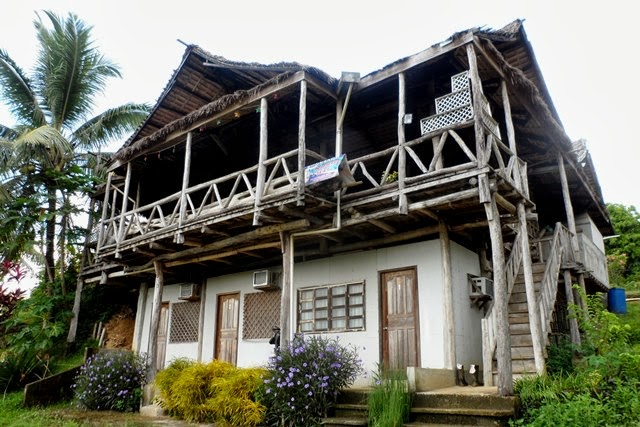

photo by Bombette G. Marin 

DR. ULYSSES VALDEZ FARM in Barangay of Rizal, Barotac Viejo, Iloilo prides itself on being a family-friendly resort with many activities available for both parents and children. The resort presents an ambience that is in tune with the rural surroundings. The resort is equipped with three fully air-conditioned, functional cabin style rooms in a style that befits the environment of a farm. Fr more information, please contact Mrs. Merelyn P. Valdez at 09298366075/ 09228267231/ 09065556375 or at telefax (033) 3620208.

photo by Vincent Angelo Gefes

MARBUENA BEACH RESORT in Binongan-an Island, Ajuy is a beautiful island holiday destination. Activities include sailing, fishing and scuba diving and trekking. You can beach-hop your way down the Island situated seven kilometers from the poblacion.  It boasts of white sand and its clear blue water. The resort offer air-conditioned rooms as well fan rooms for couples and groups. For more information, please contact Marbuena Island Resort at 0929-6465415 or at (033)3291780 or email: marbuenaisland@yahoo.com and check their website: http://marbuenaisland.multiply.com.


photo by Bombette G. Marin

TERRA VERDE FARM AND FOREST PARK in Barangay San Antonio, Ajuy is an inland resort with facilities and the amenities blending perfectly with its natural environment. It is surrounded by lush trees with and an ever-so-peaceful environment. Visitors will find very clean rooms for very reasonable prices. The fan rooms with private bathroom in duplex style that can accommodate a group. A beautifully and intricately designed mini-convention hall that can host seminars, small conventions and special occasions camouflages the ambience of the resort. For more information, please contact them at 09177233324 or at (033) 392-0210.

photo by Bombette G. Marin

MARICHITA’S BED AND BREAKFAST in Barangay Pili, Ajuy is a charming, small privately-owned accommodation facility with a wonderful view of the sea and Ajuy’s coastline. This two-story accommodation facility is decorated with a tasteful inspirational blend of local art and contemporary comfort. It offers six comfortable air-conditioned rooms, a communal kitchen, a roof deck perfect for that intimate evening party. For more information, please contact Mr. Roy A. Latap at 09275226031.


photo by Bombette G. Marin

RODBON PLACE in Barangay Aspera, Sara offers 12 air-conditioned rooms for a group of two and four persons. It has a restaurant, a videoke room that can accommodate a group of 20 persons. For more information, please contact, Mr. Kenneth Montinola at 09198667563.

photo by Bombette G. Marin

ALEXIS AND ALEXA POOLSIDE PENSIONNE in Barangay Damasco, Sara has seven (7) air-rooms for those who would want to stay overnight; three (3) rooms have air-condition and four (4) are fan rooms good for couples and a group of five (5) participants. It also has a swimming pool that is open to the public from Mondays till Sundays. For more information, please call 09999959156 or 09308440198.

Enjoy elegant accommodations, fine dining, and thrilling recreation at these beautiful resorts where you will have the opportunity to experience the best rural Iloilo has to offer, whether you are looking for relaxation or adventure.

Wednesday, August 28, 2013

Badiangan Tahu: The Sweet-Hot Pride of the Ilonggos


Even though you can find various brands of ginger tea at the shelves in any supermarket Badiangan Tahu Instant Ginger Tea tastes entirely different, remarkably better than any other brand available in the market.

Barangay Iniligan in Badiangan, Iloilo continues the long history of making ginger ale the old fashioned way. Mr. Diosdado V. Aguilar Sr., inventor and proprietor of Badiangan Tahu Instant Ginger Tea, has remained pure and true to his historical beginnings of preserving the rich tradition of making old-time ginger tea. His passion dates back to 1970 when he started doing his research on growing ginger and its many uses.


Mr. Aguilar soon developed Badiangan Tahu Instant Ginger Tea in the mid 1970’s and it became so in demand that the local folks simply could not get enough of his delightful tea. He quickly worked on having his product patented. Now, Badiangan Tahu Instant Ginger Tea, Philippines Patent UM 2460 is the only patented ginger tea in the whole Philippines. This would mean that his product is wholesome and super high quality. The town has its Ginger Growers and Producers Cooperative that was organized with Mr. Aguilar as its founding president.


The “Original” Badiangan Tahu by Mr. Aguilar is an impressive display of what happens when you take quality ingredients and let their natural flavor take center stage. In this case, you have got a formulation that relies heavily on the flavor of the fresh peeled ginger that goes into each pack. Presently, it has with sugar and sugar-free varieties.

Drinking tahu regularly is medicinal. Badiangan Tahu uses the whole fresh root so that it can better capture the health benefits of ginger which includes: (a) alleviating nausea – ginger tea is often taken for motion sickness and morning sickness; (b) helping digestion – drinking ginger tea can calm the stomach and attack toxins in food that might cause stomach upset or illness; (c) fighting colds. Drinking ginger tea is also good for women's health.


Ginger is a low-growing tropical plant which is easily grown. It grows up to 4 feet high with alternate, thin, green leaves up to 7 inches long. The part which is used is commonly called ginger root although technically it is the rhizome that is used. The rhizome is an underground stem from which roots and shoots grow. Ginger has a quite sweet, pungent smell and the taste is distinctly fiery. The chemical which makes it hot is called “gingerol” and is a relative of capsaisin which makes chillis hot.

The 5th class municipality of Badiangan is situated 40 kilometers from the city. Composed of 31 barangays, it has a land area of 6,335 hectares. Agriculture is the major source of income of its people. The town is blessed with abundant rolling hills perfect for planting ginger or Luy-a as it is commonly called by the Ilonggos.


Friday, August 23, 2013

Pottery Making in Miagao: True to Tradition

a family of potters in Barangay Cagbang, Miagao, Iloilo, photo by Bombette G. Marin

Travel to Barangay Cagbang in Miagao, Iloilo to try your hands in making clay pieces like mini pots and jars, pendants, vases or beads under the guidance of local potters that have never stopped turning all their pieces by hand. There is even a workshop where you can test your own pottery-making skills with your clay ready.

traditional "pugon" for wood and charcaol, photo by Bombette G. Marin

The barangay has long been the cradle of Miagao's good quality clay pots. Traditional pottery making in the area starts with the gathering the clay from natural deposits. They go through pounds and pounds of natural clay weekly, normally dug at the back of their houses. The clay is then packed in thick paper cement bags or dried banana leaves and carried back to their homes to be worked into pottery. Before the potter could begin forming the clay, potters had to remove any hard, non-clay items, such as pebbles or twigs. The traditional process required adding water to the clay and then kneading the body using their bare feet for a long time to remove all inconsistencies making sure it is smooth and with even texture. Then they shape the clay body using basic traditional tools that include the wheel and turntable; shaping tools such as a paddle, rolling tools cutting and piercing tools.


Pottery is made by forming a clay body into objects of desired shapes. The figures are then dried. Before heating the objects, they are covered with fried hay then heat them to high temperatures. Baking normally lasts for 3 hours. For pots, a finishing tool such as a burnishing stone or a “Bato Bantiling” is used.


Clays had been pumping through their veins and hands many centuries ago. And many generations of potters in the barangay have passed down the craft from its humble beginnings all the way to today. Though the pottery has made some concessions to modernity, including electric turning wheels and enormous gas-fueled ovens, most of them have no part of pot-making machines.

In August 11 of this year, potters have organized themselves as the Cagbang Association of Potters and are composed of 22 active members headed by Mr. Edgardo Reyes. Members are now making flower vases, ashtrays, paperweights, trinkets, showpieces, decorative figures and mini tea sets that can be offered as gifts to the loved ones and can be used for interior decoration.

Pottery art is the traditional of all art forms. Many of the world’s civilizations have left indelible marks of their art and culture through their art of pottery.  Ancient potteries with rustic shapes and coarse textures are heritage pieces that make for ethnic decorations.  The Terracotta objects, clay artifacts and glazed potteries are some popular antique pottery items.


Miagao church in the eyes of a 17-year old boy potter

Though pottery making has changed over the years, and the process of pottery making has been modernized in some ways, two things have remained constant down the generations: the passion family members show for their craft and the hard work they commit to it.

clay beads as bracelets for sale

Barangay Cagbang is situated 7 kilometers from the town center or a 20-minuter tricycle ride. For more information, please contact Mr. Arli John Nim-Municipal Tourism Officer at 09328748314 or Mr. Edgardo Reyes, President, Cagbang Association of Potters at 09052026543 or 09996535809. See more of their potteries on exhibit at the Miagao both for the 9th Tumandok on September 18-21 at the fountain area of Robinsons Place-Iloilo.


Wednesday, August 21, 2013

WEAVING ILOILO

a weaver in Miagao weaving hablon fabric for a Barong, photo by Nene Paguntalan Jr.

Weaving is one of the most ancient crafts in Iloilo. It has been a part of the Ilonggo culture that has survived for thousands of years. Textiles were an important commodity as well as symbol in many regions of pre-Hispanic Philippines. Dresses using hand-loomed fabrics suggested class, and gender identity. Every region or ethnic group, at the time of the conquest, was said to have its own style of dress and its own fabric.

Historically, sometime in the 18th century, Iloilo has a small industrial sector, dominated by artisan production and small home-based businesses. A lively trade in local handicrafts includes pottery, wood and bamboo crafts and hand-loomed fabrics. In the later part of that century, the development of a large-scale weaving industry started the movement of Iloilo’s surge in trade and economy in the Visayas. It was then when Iloilo was referred to as the “Textile Capital of the Philippines” where hand-loomed produce such as Sinamay, Piña (pineapple fiber) and Jusi (banana fiber) were exported to Manila and to other foreign countries. There has been a tremendous demand for these Panay fabrics. This ushered in a period of unparalleled prosperity for the Ilonggos.

shuttle carrying blue thread and rotex,
photo by Bombette G. Marin
The local textile industry became popular which gave rise to the upper middle class Ilonggos. The weaving industry in Miagao boast its “habol” or “hinabol” made only of fibrous natural materials. However, economic stagnation of the textile industry began due to competition of cheap cotton from Great Britain in the later part of the century.

Weaving took its backseat for some time because most people are not willing to pay for hand-woven cloth when inexpensive machine-made fabric became readily available in the market. The quality of their work was good, but the market was too small to support many of them.

Weavers made innovations by combining natural fibrous materials with man-made fibers introduced in the early 1920’s, and started to produced colorful textiles that became to be known as “Hablon”. This fabric has evolved to become a major player in the Philippine textile industry, with its heyday in the 1950’s up to the 1970’s. However, it again suffered a decline in 1980’s due to the predominance in the world market of less-labor intensive, machine-woven textiles. This also brought about a dramatic decline in the number of weavers, who started to look for better livelihood opportunities, and lack of interest among the younger generation to take up this weaving trade.

weaver from Igbaras (IKWA), 
photo by Bombette G. Marin

Today, there has been a revival of the weaving traditions thanks in large part to government agencies and concerned cultural workers in Iloilo that have made it viable to keep the tradition alive. Efforts are being made to keep it alive for future generations. The hablon fabric has emerged into a versatile and unique textile, currently making waves in the Philippine and international haute couture. It also shows great potentials in the global market for textiles, next to the old-time favorite, piña and jusi. Hablon has caught the attention of fashion designers who have developed a distinct couture out of it and has made its way into several fashion houses in the United States, Singapore, Hongkong, and the United Kingdom.

Many women now continue to weave in the towns of Miagao, Oton, Badiangan, Igbaras and Dueńas. Many are also involved in the production of our local fabrics such as dyeing and hand-spinning fibers, particularly under the workshop model. The fabrics were woven on portable looms, which limited the size of the fabric as well as the tightness of its weave.

spinning the thread before placing
it inside the shuttle ready for weaving,
weavers from Salngan in Oton, 
photo by Bombette G. Marin
Weavers labor in cooperative workshops for around 8-10 hours daily, while others work in their homes to alternate their weaving with their domestic chores. As the men walk kilometers to their fields, women stay home to raise their babies and weave. They are not paid at an hourly wage, but rather for the completed fabric sold per meter in the local market.

With the rise of popular tourism in Iloilo and its surrounding municipalities, women now use their weaving as a way to provide for their families.

The Indigenous Fiber Fashion Fair organized by the Iloilo Provincial Government through the Provincial Tourism Office and SM City-Iloilo is an annual project that acknowledges these individual artists for their craft. Started in 2008, the event is set to promote our local weaving industries with the objective of exploring the history and importance of fiber and textile arts in our communities and our lives. Daily presentations through series of fashion shows does not only showcase the creativity of our local weavers but, more importantly, it hopes to generate sustained demand for these local fabrics both here and abroad.

a weaver in Badiangan fixes the thread before weaving, photo by Bombette G. Marin


The event is also aimed to foster inter-generational connections, share new techniques and project ideas, and provide opportunities for shopping of hand-made, unique gifts and collectibles, putting to fore the art of hand weaving, one of the most important crafts handed down from generation to generation along with the indigenous fabrics admired for their sheer beauty, uniqueness and global appeal.

An Unforgettable Farm Experience at Pallon Farm in San Enrique

San Enrique, Iloilo is a truly tranquil and peaceful town guaranteed to help you relax, slow down, and connect with nature. Visit sm...