Tuesday, February 19, 2013

Barotac Viejo Gears Up for the 4th KANAWAY Festival

Sulay Basya Festival of Sara, photo by Al Destacamento


Preparations are underway at the municipality of Barotac Viejo for this year’s Kanaway Festival event that will begin on March 2-3 2013. Organized by the Northern Iloilo Center for Culture and Arts (NICCA), the celebration is spearheaded and initiated by the Northern Iloilo Polytechnic State College (NIPSC) System.
photo by Al Destacamento

Now on its 4th year, with the theme “Kanaway Festival 2013: Pamaagi kag Alagyan Bulig sa Pag-usoy sa Tadlong nga Dalan,’ the event will open on March 2 (Saturday) with the Parade of Drum and Lyre Corps with the special participation of the candidates for the Ulitawo kag Lin-ay sang 4th Kanaway Festival at 7:30 a.m., Magsaysay Avenue, Barotac Viejo; Newspaper Gown Making and Home Wall Décor Making at 8 a.m., Municipal Booth, NIPSC Barotac Viejo; Drum and Lyre Corps Competition-Elementary Level at 9:30 a.m. at the Municipal Gymnasium; Tribu sang mga Kabataan-Culture Based Tribe Competition at 1 p.m., Municipal Gymnasium and; Pasundayag sang Ambahanon kag mga Ilonggo nga Saot at 7 p.m., Municipal Gymnasium.

March 3 (Sunday) will open with the Parade of Participants in the Drum and Lyre Corps Competition-Secondary Level at 7:30 a.m. at B. Causing Street, Barotac Viejo; Cheerleading Competition at 8:30 a.m. at the Municipal Gymnasium; Drum and Lyre Corps Competition-Secondary Level at 8:30 a.m., Municipal Gymnasium; Talents Showdown of candidates for the Ulitawo kag Lin-ay Sang Kanaway at 2 p.m., Municipal Gymnasium and the Coronation for the Search sang Ulitawo kag Lin-ay sang 4th Kanaway Festival at 7 p.m., Municipal Gymnasium.

Panagat Festival of Estancia, photo by Al Destacamento
Iloilo is this region’s Festival Capital. It is a province of festivals and fairs. It is where people come together from across the country and the globe to share their passion for arts, culture and ideas. This welcoming, inspiring and open-minded atmosphere is heightened by the approachable beauty of this breathtaking historical destination.

The 5th District in the province of Iloilo is an attractive resort destination with lots of tourist spots from inland resorts to the natural beauty of their islands. Road network is good, making it especially convenient for tourism. But not known to many, there are a number of festivals in the area because almost every municipality in this district celebrates one of its own. These festivals are held annually and celebrate important seasons of the year, the harvest. Others celebrate religious occasions. A number of these festivals are common to most parts of Iloilo. However, they may be called by different names in various parts of the province or may be celebrated in a different fashion.

photo by Al Destacamento
The festival of Kanaway is the only one of its kind in Iloilo. It features a grand showdown of cultural performances from the different participating festivals in the 5th District of the province. For this year’s Kanaway tribe competition, the festivals of Ajuy (Tambobo Festival), Sara (Sulay-Basya Festival), Batad (Panulo Festival); Concepcion (Tampisaw Festival); Lemery (Saug Festival), Barotac Viejo (Patubas Festival), Estancia (Panagat Festival) and Carles (Pakinhason Festival) will be competing.

The diversity of our local celebrations provides a starting point for our fellow Ilonggos and visitors to begin to understand and value our many distinct cultures. What better way to do that than to showcase our festivals.

photo by Al Destacamento
Be a part of the Kanaway Festival to promote what is good about the 5th District in the province of Iloilo. For more information, please contact Miss Lorie Ann Dumdum-Municipal Tourism Officer of Barotac Viejo at 09995796398 or Hon. Merelyn P. Valdez-SB Member on Tourism at 09157418182 or at (033) 3620160 or 3620312.


Maasin Hosts Visayan Leg for the 1st International Gongs and Bamboo Music Festival

Hirinugyaw-Suguidanonay Festival uses bamboo as a prop and a musical instrument for their dance

Less than a week remains to the anticipated launch of the Visayan Leg for the 1st International Gongs and Bamboo Music Festival at the Maasin Gymnasium on February 22-26, 2013.  This festival will showcase Maasin, Iloilo as the landmark destination to experience Indigenous cultures and their authentic and diverse music.


Expect an influx of indigenous groups, musical performers and maybe artisans from participating countries such as – India, Vietnam, Thailand, and Indonesia and local others, to this entertaining 3-day festival performances. Fall in love with this art and experience a wealth of Indigenous music from indigenous cultures as your appreciation for diversity deepens.


Performances will start on February 23 (Saturday) at 7 in the evening with the opening performances of Manuglayon: Quiling National High School with the Cordillera Music Tutorial and Research Center of Baguio City and the Ensamble Moderu Pailu from Indonesia. A concert follows with performances from Vayali Folklore Group of India, the Manuglitap: Maasin Central Elementary School, the Panay Bukidnon of Iloilo, Manugdabong: Dagami National High School and the Khac Chi Bamboo Music of Vietnam.
 
February 24 (Sunday) at 3 in the afternoon will feature Sabai Sabai Thailand of Thailand along with Manugrara: Tigbauan National High School, Bagobo of Davao City, Manugpusog: Layog National High School and the Ensamble Moderu Palu of Indonesia. The concert at 6 in the evening will showcase Khac Chi Bamboo Music of Vietnam, Manuggama: Maasin National Comprehensive High School, Cordillera Music Tutorial and Research Center of Baguio City, Manugmakan: Saint James Catholic High School and Prasarnmit Performing Arts Alliance of Thailand.

February 25 (Monday) at 3 in the afternoon will highlight Vayali Folklore Group of India, Manugsukdap: Siwalo National High School, Bagobo of Davao City, Binalantak: Burak National High School and Prasarnmit Performing Arts Alliance of Thailand. The closing ceremony at 6 in the evening will have Sabai Sabai Thailand of Thailand, Manuglayon: Quiling National High School, Khac Chi Bamboo Music of Vietnam and Ensamble Moderu Palu of Indonesia.


The Visayan Leg for the 1st Gongs and Bamboo Music Festival provides an opportunity for cultures to showcase their traditional music using gongs and bamboo. The festival’s mission continues with the vibrant energy that got it all started, to preserve the cultural groups’ rich traditions in music accompanied by gongs and bamboos.
 
A gong is musical percussion instrument consisting of a round, thick disk of metal varying in diameter from about 20 to 40 inches. It is made mainly from bronze or brass but there are many other alloys are in use. It is commonly suspended on a frame or a stand.
 
Chinese in origin, a gong is of three types: (a) Suspended Gongs are flat circular discs of metal suspended vertically by means of a cord passed through holes near to the top rim; (b) Bossed or Nipple Gongs with a raised centre boss often suspended and played horizontally, and; (c) Bowl Gongs are bowl-shaped and rest on cushions. Gongs are made mainly from bronze or brass but there are many other alloys in use.
 
It is a popularly used instrument for religious ceremonies, state processions, marriages and other festivals in China and Japan. Gongs are traditionally manufactured in China, Tibet, Burma, Korea, Indonesia, and the Philippines.
 
In the Philippines, as early as 1896, musical instruments manufactured in bamboo were popularly used by groups of Filipino musicians organized as bamboo bands. Mostly revolutionaries, the first bamboo bands made their own instruments and played patriotic musical pieces while fighting for independence from Spain. Now, we have improvised western instruments that are more on the electrical side but the instruments are different. Musical instruments such as piccolos, tubas, clarinets, flutes and saxophones are now made of bamboo and the rhythm is the all the same.


Pintados de Pasi Festival with their bamboo prop

The celebration wants to take bamboo and gong music worldwide and incorporate international flavors. It is also an opportunity that allows performing groups to continue passing on their cultural tradition—be it a particular style of music to the next generations.


The International Gongs and Bamboo Festival is an initiative undertaken by National Commission for Culture and the Arts in partnership with the municipality of Maasin for the benefit of the town’s growing economy and tourism appeal. Maasin will be an even more appealing destination for travelers seeking the best vacationing-experience. See you there!

Tuesday, January 29, 2013

15th Salakayan Festival of Miagao


The annual celebration of Salakayan Festival of Miagao draws support from various organizations and groups especially those living and working abroad, inviting them to come home and re-discover the strength, talent, and beauty of their town and its people. As the community immerse themselves in the frenzied observance of their 297th town fiesta this year, the celebration will highlight the 15th Salakayan Festival with the theme, “Saulugon: Dugong Miagawanon” on February 2 -10 with the much-anticipated tribe competition on February 9 (Saturday) at 8 a.m.
                                                                                
Taken from the Hiligaynon word “Salakay” or “to attack,” the tribe competition remains as the favorite of all special events during the 9-day long celebration. It gathers the largest crowds of spectators year after year, from its farthest Barangay, to witness their favorite tribe perform.


The dance-drama competition is marked by the dramatic presentation as interpreted by groups through dance as it trace back the historic battle that took place in the town where the locals successfully defended their town from the attack of the barbaric Sulu pirates in May 7, 1754.


Spanish chroniclers have recorded major slave raids that engulfed the coastal communities especially in the Visayas where men, women and children were captured and sold in Sulu and Java to work in the fields; bartered off to merchants for other Asian markets; some were used as household retainers others as rowers of pirate vessels.


Ancestral settlement near the sea became the objects of frequent Moro raids. Pirates attacked and enslaved Christian-Filipinos. Their invasions left tracks of death, blood, and ashes. The peaceful community of Miag-ao was not spared from these raids that resulted to the burning of the original church that was situated at that time in Barangay Ubos.

Along with the tribal dance competition is a special procession of the Gigantes or towering figures that commonly depict archetypes of the town, such as historical figures of local relevance. The festival is an opportunity for the people to pay tribute to their cultural roots

The Higantes is another feature of the festival tradition. Mammoth papier mache figures rising from 10-15 feet in height with bodies in large bamboo or  wire cages, draped in yards of colorful cloth. A man slips under each giant, holding up its torso with a metal or bamboo pole to make it walk, seeing his way through an eyehole somewhere in the giant’s clothes. The Higantes are crowd-drawers of the tribal dance competition.

The municipality of Miagao is 40.5 kilometers south from Iloilo City. It is bounded by the towns of Igbaras to the northeast, by Guimbal to the east, by San Joaquin to the west and by the municipality of Sibalom in the province of Antique to the northwest. It is comprised of 199 barangays sharing a land area of 13,286 hectares. To get to the town, one can take a jeepney at the Don Benito Q. Acap Sr. Southern Iloilo Perimeter Boundary Terminal in Barangay Mohon, Oton, Iloilo. Metered taxis are also available at the terminal.

If you are holidaying Iloilo, enjoy some day excursions to the different attractions of this historic town. For more information, please contact, Mr. Edison Molanida-Municipal Tourism Officer at 09206995881.

A Great Literary Show through HIRINUGYAW-SUGUIDANONAY Festival in Calinog

photo by Vincent Angelo Gefes

The Hirinugyaw-Suguidanonay Festival in Calinog is known to be Iloilo’s only literary festival that showcases the wonderful story of Hinilawod through dance performed in its unique mix of poetry, chants and music. This type of celebration is the most prestigious held annually in this beautiful heritage municipality.

The tribal dance competition is the heart of the festival celebration designed especially for literature lovers, to inspire them to go on to greater things. The event has been enthusiastically endorsed by educators and teachers.

photo by Vincent Angelo Gefes

Hinilawod is a great source of information about the culture, religion and rituals of the ancient people of the Sulod, a thriving indigenous community living along the banks of Halawod River in Central Panay. DR. F. LANDA JOCANO, a renowned Filipino anthropologist who did a comprehensive study on Hinilawod by living with the Sulodnons in the mountains for years so to gain the respect and approval of the people there.


a Sulodnon's garment

The Sulod tribe inhabits the mountains of Central Panay, Tapaz, Capiz, Calinog, Lambuanao, Iloilo and in Valderrama, Antique Province.  They speak in Sulod dialect, a combination of Kiniray-a and Hiligaynon. The Sulod women wear Patadyong (checkered cloth hand-woven in Panay) for their lower garment, a red top with long narrow sleeves, usually made of cotton with harmonious colors in various patterns. On special occasions, the women a headdress locally known as Pudong---a narrow headpiece of red color with old coins; a Biningkit or a necklace made of various-colored glass beads and silver coins strung together; and wrist-like accessory of various colored glass beads. They are known for their dances, the Binanog and Kuratsa.

Hinilawod, translated in English as “Tales from the Mouth of Halawod River” is one of the longest epics known with 28,155 lines in verses. It is even longer than the Iliad which has only 15,700 verses. This literary masterpiece, originally chanted in Kiniray-a (a native language prevalent in the mountains of Panay) from memory would take three days when chanted in its original form.

The verses that recounted the exploits of triplet Sulodnon demigod brothers (sons of Datu Paubari, ruler of the Halawod and the beautiful Alunsina) of ancient Panay, Labaw Donggon, Humadapnon and Dumalapdap.


Hinilawod is one of the hardest of all Panay oral literature passed from generation to the next. It has been said that the chanter, the Babaylan (native priest) can only take one apprentice at a time to learn the epic by listening and internalizing it. The apprentice needs to have a personal relationship with the Babaylan by being there all the time, watching the Babaylan while working and being involved in everything the Babaylan is doing.


Calinog is a peaceful town with ancient cultural traditions. The Hirinugyaw-Suguidanonay Festival is a reflection of its historical roots. It is as an opportunity to revive the literary and intellectual spirit of the Ilonggos. The only one of its kind, it has not only brought together literary talents but also writers, poets and cultural figures from the region over.

Hirinugyaw-Suguinonay also helped to focus attention on and encourage respect for local traditions. Literature, dance and music, which most people associate with our local culture is a powerful tool in assembling and reinforcing our identity.


Entering its seventh year, the festival draws visitors from across the province. With this year’s theme, “Si Sr. Sto. Nino Pasidunggan, Kulturang Tumandok Amligan, Kalamidad Pakigbatuan, Padulong sa Kauswagan,”the celebration kicked off in January 25 (Friday) with the Torch Procession and Lighted Sto. Nino Contest and the Presentation of Hamtong nga Lin-ay kag Ulitao and Linghuron nga Lin-ay kag Ulitao; January 26 (Saturday) with Biodiversity Exhibit and the Cultural Presentation of District II; January 27 (Sunday) with the Cultural Presentation of District I; January 28 (Monday) with the Talent’s Night of Hamtong nga Lin-ay kag  Ulitao and Linghuron ng Lin-ay kag Ulitao; January 29 (Tuesday) with Adlaw sang Panguma; January 30 (Wednesday) with the Cultural Presentation of WVSU-Calinog Campus; January 31 (Thrusday)  with the Coronation of Linghuron nga Lin-ay kag Ulitao kang Hirinugyaw-Suguidanonay Festival 2013; February 1 (Friday) with the Coronation Night of Hamtong nga Lin-ay kag Ulitao Kang Hirinugyaw-Suguidanonay Festival 2013; February 2 (Saturday) with the Festival of Mini-Sounds; and February 3 (Sunday) with the Tribal dance competition at 9 a.m. and the Festival of Sounds at 1 p.m.

To get to Calinog, numerous jeepneys and buses run daily from Pavia People’s Terminal in  Barangay Ungka-II, Pavia, Iloilo or at the Bus-Jeepney Terminal fronting Christ the King Memorial Park in Jaro, Iloilo City.

Saturday, January 19, 2013

Concepcion: Natural Splendors of Sun, Sand and Sea

Bulubadiangan Island's main attraction is its sandbar, photo by Roy Gatpatan

CONCEPCION, Iloilo has some great island resorts with stunning white sands and tropical waters.It is one of Iloilo’s most beautiful ‘gifts of nature.’ Most of the islands are tasseled by white sand on the one side and old-growth mangrove forest on the other. The beaches are picture-perfect with cooling shady spots and beautiful deep-blue waters for good swimming. Best of all, you won't have to elbow for space.

Sandbar Beach Resort, photo by Norman Posecion (USA-CAP)

SANDBAR BEACH RESORT in Barangay Bulubadiangan is a satellite island of Barangay Polopina. It is known as the local’s favorite because of its beautiful long stretch of sandbar. It has picnic facilities and tent sites n face offshore Pan de Azucar.

AGHO ISLAND is a privately owned island measuring almost eight (8) hectares and offers white sandy beach with turquoise water. If you love swimming and snorkeling, the island assures  these experience to be unforgettable. And for a romantic getaway, it is the perfect private getaway to slip away on your own romantic adventure.


TAMBALIZA ISLAND is famous for its landmark, Mt. Manaphag or popularly known as Pan de Azucar. There is plenty of lush greenery and the ocean is a beautiful greenish hue that merges into a dark blue out in the open waters.

BAGO SIPOL ISLAND is astonishing and almost indescribable. The waters ranges from the palest aquamarine and turquoise to the deepest sapphire matched with its sparkling white sand. Tourist who enjoys swimming and snorkeling are drawn to this exotic island.

TAKOT LUTAW REEF in Barangay Polopina is one of theMarine Protected Areas of Concepcion.The surrounding water is protected by a 10-hectare reef. Colorful corals are clustered in this area. Some of the areas are perfect for scuba diving adventure where one can get a bird's eye view of the coral formations in varieties of shapes and sizes. The best time to go is in the morning.

photo by Norman Posecion (USA-CAP)

Tambaliza Eco-Park and Resort in Barangay Tambaliza is one of the most important areas for an ecological experience. Visitors will enjoy their relaxing stroll along a boardwalk over a natural Mangrove preserve.. Overlooking are the surrounding Island of Botlog and the imposing Mt. Manaphag. The area has major board-walking or guided nature trail activities; upon docking at the eco-park’s main entrance, and; going through the reserve area. Amenities include three (3) cottages that can accommodate 25 persons at every cottage; 1 pavilion; two (2) open cottages. Entrance fee is P20.00 for a whole day visit at the park. Getting to the Tambaliza Eco-Park and Resort, tourists need to take a motorized boat at the municipal wharf and head towards Barangay Tambaliza. For more information please contact Rolinda de Julian at 09395032408.

Concepcion is full of exciting places that many of us do not remember to visit. Surely, its beautiful island barangays is one destination that would make tourists remember all their lives.

Concepcion is 111.4 kilometers north of Iloilo City. It has a land area of 9,702 hectares comprised of 25 barangays of which 16 are component islands. To get to the town, air-conditioned busses are available daily at the Northern Central Iloilo Transport Terminal, Inc. in Barangay Tagbak, Jaro, Iloilo City. For more information, please contact, Mr. Jim Pendon – Municipal Tourism Officer at 09997710086.


Igbaras: Magnificent Natural Heritage

Rafflesia Garden in Barangay Igcabugao, Igbaras, photo by Bombette G. Marin

IGBARAS, Iloilo is brimming with arts, culture and outdoor adventure, along with a rich history. It is home to popular attractions such as caves, cascades and the rare flora gardens with varied recreational activities that is sure to delight visitors of all ages and interests.

photo by Vincent Angelo Gefes

Igbaras High Mountain View Resort in Sitio Pasong is a mountain resort-style with stunning views overlooking the green mountain ranges of Igbaras and Tubungan; the Tangyan River; the scenic seascape of Guimbal and the island of Guimaras. Tucked away quietly amid scenic views awaits finely appointed guest rooms sitting on the point of a private mountain ridge. It is surrounded by extraordinary mountain backdrops and picturesque views that provide an ideal setting for rest and relaxation. The two (2) casually elegant bedroom cottages are good for couples or for a group of four. The resort has an outdoor pool with an amazing view of the mountains for the enjoyment of their guests. Swimming fee is P60.00 for Igbarasnons and P80.00 for non-residents of Igbaras. You can get in touch with the resort through Mrs. Emily Javelosa – owner/ manager at 09189795040 or 09189795030.

IGCABUGAO CAVE in Barangay Igcabugao is 14 kilometers away from the town proper. It is a downhill walk on a rocky track where tremendous rock formations frames the way to the cave. One can relax in the cool and clear waters of Igbolo Creek nearby. The chambers inside the cave are eerie and immense. Lantern-equipped guides will take one to a pool of clear but extremely cold water. Although there are other caves in the area such as the Passi Cave, Bat Cave, Bais Cave and Lapusan Cave.

Nadsadjan Falls, Igbaras, photo by Erna Foerster (PALI)

NaDsadjan Falls in Barangay Passi is the most popular tourist attraction of the town. It is a 100-feet high waterfall that pours into a cauldron-shaped natural swimming pool. It also one of the most visited attractions by local and foreign tourists alike due to its pristine waters. From Igbaras Town Proper it is a 30 minute ride to Barangay Passi and another 45 minute trek along the river to reach the majestic falls. There are other popular falls in the area; Guiritsan Falls and Sampanan Falls. Visitors are advised to arrive early morning and visit the Municipal Tourism Office to arrange trip to the falls.

MOUNT NAPULAK is the highest mountain in the area measuring 1,200 feet above sea level. Its shaped reminds one of a woman’s breast where massive coral rock as big as a one-storey building sits on peak, providing an eye-catching view of Iloilo and portions of the Antique Province. The trails getting to the mountain exposes the area’s virgin forests and abundant wildlife.


RAFFLESIA GARDEN in Barangay Igcabugao is a popular campground with for local tourists because it has some of Iloilo’s richest series of exceptionally beautiful forested mountains, from lowlands to highlands, large enough to preserve the integrity of the town’s ecosystem. It is home to the world’s largest individual flower, the Rafflesia. Many call it as corpse flower due to the vile smell it gives off. Its diameter can grow to over 100 centimeters and can weigh up to 10 kilograms. Even its smallest flower specie (the ones commonly found in the in this barangay) measures 20 centimeters in diameter. It has a lifespan of 5-7 days.

photo by Julius Sollesta
TANGYAN Festival annually celebrated every 3rd week of May is a time when this scenic town unites in recognizing the economic importance of its Tangyan River to the community. The river has functioned as the economic heartland where Igbarasnons are engaged in agriculture. As they say, the most fertile areas for farming are in the plains near the Tangyan tributaries where it provides irrigation, potable water and fish stocks, supporting livelihoods in the area. The festival is also dedicated to the preservation and protection of their cultural heritage and to be able to share them with the younger generation.

Igbaras is bounded on the north by the Municipality of San Remegio of the province of Antique; east by the Municipality of Tubungan, Iloilo ; west by the Municipality of Miag-ao, Iloilo; south by the Municipality of Guimbal, Iloilo. It has a total land area of 15,245 hectares subdivided by 46 barangays.

To get to the, one can take a jeepney at the Don Benito Q. Acap Sr. Southern Iloilo Perimeter Boundary Terminal in Barangay Mohon, Oton, Iloilo. Metered taxis are also available at the terminal. For more information, please contact Engr. Wilfredo “Boy” Delgado-Municipal Tourism Officer at (033) local 104- 5184022 or at 09209643404.


Anilao: A Picturesque Charming Community

photo by Jun Fuerte

ANILAO, Iloilo is a lovely little town that for some reason does not often get a mention in the papers or site or any other for that matter. There is so much to see and do here.It is a very cultural little community with beautiful natural sites in and around the town itself. It is a great little town very much worth a visit, any time of the year.

photo by Jun Fuerte

photo by Jun Fuerte

photo by Jun Fuerte

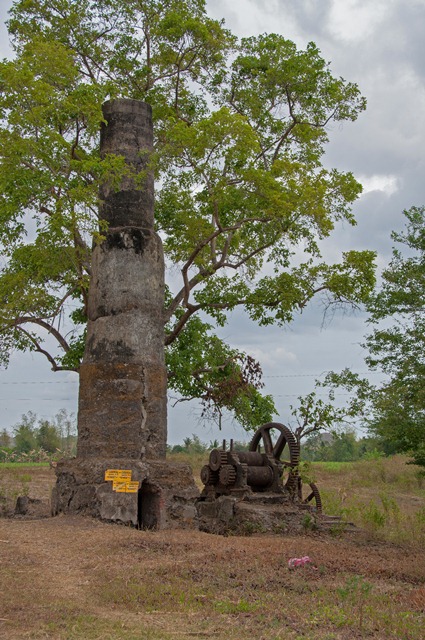
MT. HAMUGNAW situated in Barangay Manganese is dubbed as the “Cold Mountain of Anilao," It is this town’s highest mountain peak. To get to the barangay is more than 5 kilometers from the Poblacion. Passing by the area, one will see remnants of an old sugar mill center where a century-old chimney and sugarcane grinder sits quietly in one of areas to the peak. It is ideal for adventure tourism that offers good trekking and mountain climbing activities.


AGTAMBO FALLS in Barangay Balunos is a popular tourist destination of the locals especially during the summer. 

photo by Toby Pagulayan Jr. (PALI)

BANAAG FESTIVAL is annually celebrated in the last week of October till the first week of November. It is a celebration of life and spirit of its people is seen through the mesmeric and enchanted performances that revisited the significance of fire that once saved their lives as they fought for freedom against the Spanish authorities. It celebrates life and spirit through their pathways of music and movement. Dancers work with fire or light, taming and shaping its flames that flicker on poles carried by performers or dancers. They even spin flaming torches and hoops of fire to the beat of drums and percussion instruments as they raise their voices to chant, dancing and bringing their hearts in sharing this fantastically fun cultural presentation of fire and festival with the community. The community come together to explore the beauty and mystery of life: its history through this light-hearted image ritual of upbeat performances in ecstatic bliss of modernized theatrical interpretations of its history.


GUINAMOS or Shrimp paste or Bagoong is this town’s One-Town-One-Product (OTOP).  Anilao is the leading producer of shrimp paste in Iloilo.  It is processed at Barangay Poblacion.   Guinmos is a common ingredient used in many Ilonggo cuisines. It is made from fermented ground shrimp mixed with salt. Some versions are in its wet form and other versions are sun dried and either cut into fist-sized rectangular blocks or sold in bulk. It is often an ingredient in dip for fish or vegetables and even fruits. It is commonly eaten as a topping on green mangoes or used as a major cooking ingredient.  It varies in appearance, flavor, and spiciness depending on the type.

photo by Jun Fuerte

BAGS FOR LIFE is a project of Anilao’s unemployed women is a project that trains them to produce and market fashionable bags made of used newspapers and magazines. This project is in cooperation with the Zonta Club of Iloilo City II, of which the lady mayor is an active member and officer. Bags made from recycled materials is now not a new thing to the fashion world. Well, if you thought the piles of newspapers lying around you are not good for much of anything, think again. Today recycling newspapers has become a profitable venture for many communities. This situation is a result of increased environmental awareness, voluntary agreements, government mandates, and improved technology.

Anilao is located 40 kilometers northeast of Iloilo City.  With 21 barangays, it is bounded in the north by the town of San Enrique; the highest mountain of the town in the west; in the south by Barotac Nuevo; and the Guimaras Strait in the east. To get to the town air-conditioned busses are available daily at the Northern Central Iloilo Transport Terminal, Inc. in Barangay Tagbak, Jaro, Iloilo City. For more information, please contact, Mr. Emerson Franco-Municipal Tourism Officer at 09395804484.


An Unforgettable Farm Experience at Pallon Farm in San Enrique

San Enrique, Iloilo is a truly tranquil and peaceful town guaranteed to help you relax, slow down, and connect with nature. Visit sm...